Life After The Tomb
ተነሥቷል እንጂ በዚህ የለም፡፡
— ሉቃ. ፳፬፥፭
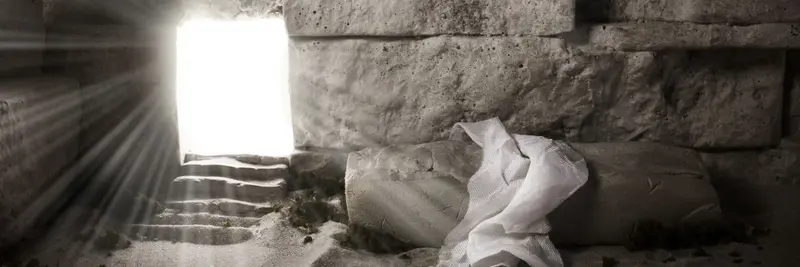
A man in a parish in Addis Ababa wakes up on a Wednesday and does not eat meat. He does not eat meat because it is Wednesday. He has been doing this for so long that the not-eating is not a decision but a fact about Wednesdays, the way Wednesdays are cold in winter and hot in summer. He goes to work. He comes home. He prays the evening prayers, or he doesn't because he is tired, and he feels guilty about it, and the guilt is familiar and small and does not produce a crisis of meaning. He goes to bed.
On Sunday he stands in the liturgy for a long time. His feet hurt. The singing is sometimes beautiful and sometimes it is not because the cantor is not very good this week. He receives the Eucharist. He does not feel transformed. He feels like a person who has received the Eucharist, which is a feeling he has had a thousand times before, and the feeling is not the point. The point is that he received it.
A thought of resentment toward his sister-in-law arises during the liturgy. He sees it. He does not build an argument for why the resentment is justified. He does not build an argument against it. He sees it and returns to the prayer. This is harder than it sounds. He is not pushing the thought away. He is choosing, again, what to attend to, and the choice costs something every time. A thought of pride arises because he is fasting and his neighbor is not. He sees this too. He has caught himself in the act of self-deception so many times that he has lost the ability to be impressed by his own virtue.
He goes to confession and says, out loud, to another person, what he has done and what he has failed to do. He does not explain why it happened. He names it. The naming is precise. He cannot say “I have been struggling with anger” when what he means is “I wanted my sister-in-law to fail and I enjoyed imagining it.” The practice does not permit the euphemism. It requires the ugly specific thing, spoken aloud, to a person who is sitting across from him and whose face he can see. Then the priest reads the absolution and he leaves. The interaction did not feel unbearable even if it did require him to say the thing he would most like to hide. He said it, and the structure held, and he was not destroyed by it.
His neighbor is sick and he brings food. His mother is dying and he sits with her and he is afraid and he prays and the prayers do not take the fear away. He buries his mother. The mourning lasts for weeks. The community comes and goes. The memorial meals happen at the prescribed intervals. He weeps and stops weeping and weeps again and gradually the weeping becomes less frequent and the intervals between the memorial meals grow longer and life reasserts itself, The grief is not necessarily completely gone but the calendar keeps moving and he is inside the calendar.
He has children or he doesn't. If he has children he baptizes them and brings them to liturgy and they are bored and he is tired and the whole thing is tedious and unglamorous and the children grow up inside the rhythm the way he grew up inside it. Some of them will leave. He knows this. It breaks his heart. He prays for them. The prayers do not feel effective. He prays anyway.
The fasts address the body. The liturgy addresses time. The sacraments address death. The community addresses isolation. He has never used the word “modernity” in a sentence. But the structure he lives inside was built by people who understood acedia and vainglory and the specific way that comfort makes you stupid, and they built the responses into the calendar so that he does not have to diagnose himself in order to be treated.
The joy, when it comes, is not exuberance. It is closer to the lightness that comes after you have carried something heavy for a long time and set it down. It surfaces at odd moments. In the Paschal liturgy at midnight when the doors open and the light comes in, yes. But also on an ordinary Thursday when nothing has happened and he is washing dishes and something in him is simply glad, not glad about anything, just glad.
He will die. He is afraid of it in the ordinary way, the way you are afraid of something you have seen other people go through and that you know you will go through and that you have been given a set of practices for going through. The practices do not eliminate the fear. They give the fear a place to live that is not his entire life. The fear lives in its room. He lives in the rest of the house. The house was there before he was born and will be there after he dies. He did not build it. He cannot improve it. It is not his. He lives in it. It is Wednesday and he has not eaten meat and his feet will hurt on Sunday and the cantor will be off-key and none of this matters and all of it matters and he cannot explain the difference and does not try.